Calgary's Water Restrictions Are Back: Can You Even Wash Your Car? (Yes — Here's How)
Calgary's water restrictions fine driveway car washing up to $3,000. Rinseless detailing and professional mobile services remain legal. Here's what you need to know.
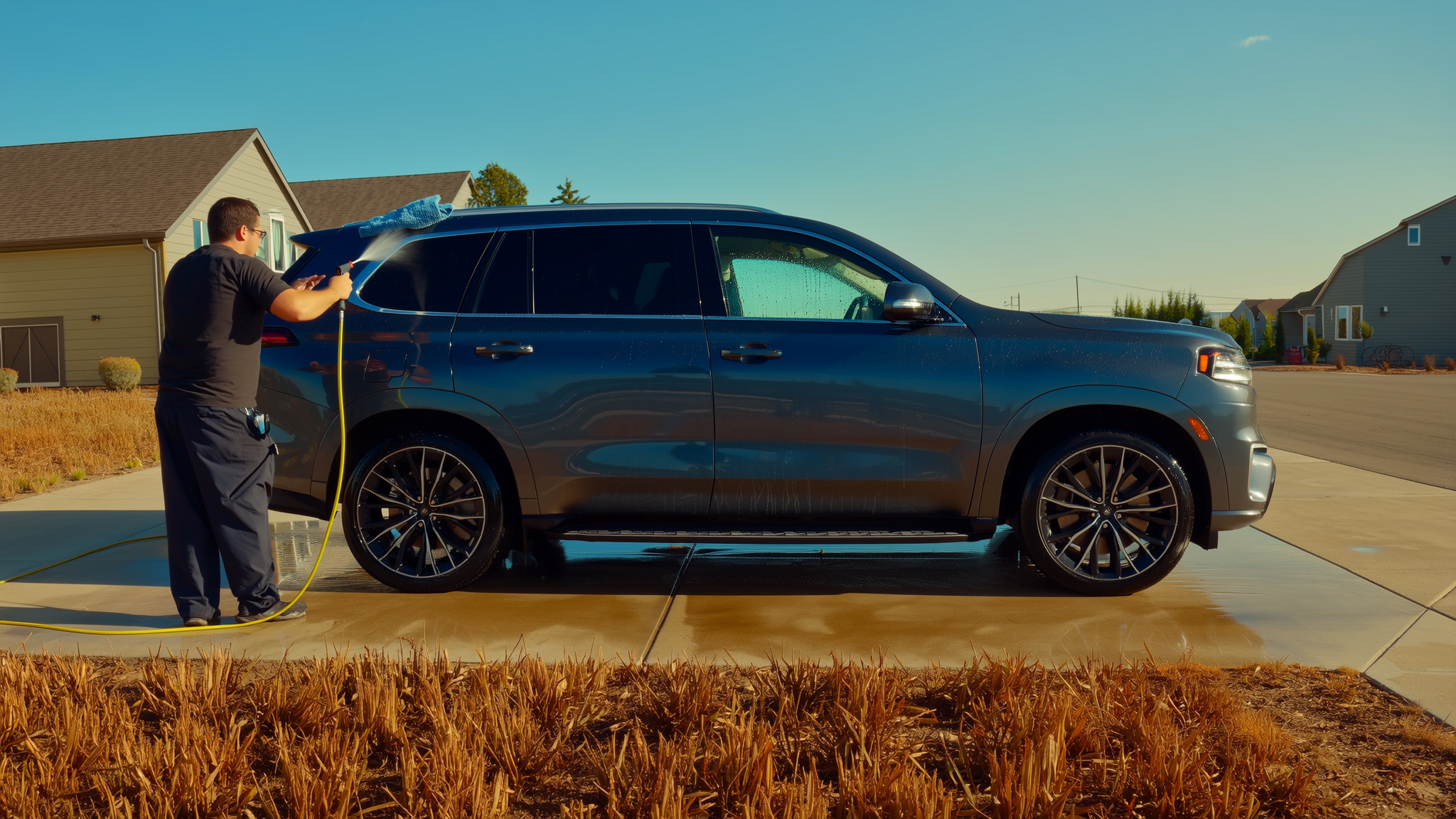
Calgary went to Stage 4 water restrictions from March 9 to April 2, 2026, following continued infrastructure stress from the city's major water main failure. Under Stage 4, residential car washing on driveways was prohibited entirely. Fines for violations ranged from $400 at Stage 1 up to $3,000 at Stage 4.
The restrictions have eased since then, but Calgary's water infrastructure challenges aren't going away. The city has been clear that restrictions will return as needed, and the pattern of the past few years suggests that seasonal restrictions are becoming a regular part of life rather than a one-time emergency.
For vehicle owners, the question comes up every time restrictions are announced: can you wash your car, and if so, how?
What Calgary's Water Restriction Stages Mean for Car Washing
Calgary's water restriction bylaw creates a tiered system, and each stage changes what you're allowed to do on your property.
At Stage 1, residential car washing is permitted but only with a bucket and a trigger-controlled hose nozzle. You can't let a hose run freely. At Stage 2, car washing is restricted to specific days or times, and the bucket-and-nozzle rule still applies. At Stage 3, driveway car washing is prohibited for residential properties. At Stage 4, all non-essential outdoor water use is banned, including any vehicle washing at home.
The fines escalate with the stages. A Stage 1 violation carries a $400 penalty, and that climbs to $3,000 at Stage 4. The city has enforcement officers who monitor compliance, and neighbours report violations. These aren't hypothetical penalties.
Commercial car washes remain permitted at all stages because they use closed-loop water recycling systems. The city distinguishes between the uncontrolled runoff from a driveway hose and the controlled, recycled water in a commercial facility. That distinction is reasonable from a conservation standpoint, but it leaves vehicle owners in a bind if they don't want to take their vehicle through a drive-through wash.
The Problem with Drive-Through Car Washes
Drive-through car washes are legal during restrictions, but they're not ideal for your vehicle's paint. Friction washes — the kind with spinning brushes or cloth strips — make contact with the paint surface using materials that trap and drag contaminants across the finish. Every pass introduces micro-scratches. Over dozens of visits, those scratches accumulate into the swirl marks that make paint look dull and hazy under direct sunlight.
Touchless washes avoid the physical contact but compensate with high-pH and low-pH chemicals that strip wax, sealant, and even ceramic coating over time. If you've invested in paint protection, a touchless wash is gradually undoing that investment.
Neither type of drive-through wash addresses the contaminants that matter most for long-term paint health: bonded iron fallout from brake dust, tree sap, bird droppings, and the mineral deposits that Calgary's hard water leaves on the surface.
Rinseless Washing: How Professional Detailers Work Within Water Restrictions
Professional mobile detailing operates under different rules than residential car washing, and the techniques used are designed for low-water or no-water situations.
A rinseless wash uses a high-lubricity wash solution mixed into a single bucket of water. Microfiber towels are soaked in the solution, laid on a panel to encapsulate dirt and contaminants, then gently wiped and flipped to a clean side. The solution suspends particles in the towel rather than dragging them across the paint. No hose, no runoff, and typically under 10 litres of water for an entire exterior wash.
This method works because the chemistry of rinseless wash products has advanced significantly over the past few years. Modern rinseless solutions contain polymers that wrap around dirt particles and lift them away from the paint surface, preventing the scratching that would occur if you simply wiped a dirty panel with a damp cloth.
For vehicles with ceramic coating, rinseless washing is even more effective. The hydrophobic surface means contaminants sit on top of the coating rather than bonding to the paint, and the rinseless solution lifts them off with minimal effort or friction.
Wastewater Rules for Mobile Detailing in Calgary
Calgary's bylaws specifically address mobile power washing and detailing services. Under the city's regulations, all wastewater from mobile vehicle washing must be collected and disposed of at the Shepard Landfill Industrial Car Wash Disposal facility with a valid permit.
This means a professional mobile detailer working in Calgary is required to capture runoff rather than letting it flow into storm drains. The methods vary — some use containment mats, others use vacuum extraction systems, and rinseless wash methods produce so little liquid that collection is straightforward.
This regulatory framework is actually an advantage for vehicle owners during restrictions. When a professional service is set up to comply with wastewater bylaws and uses low-water wash techniques, it remains a legal option even when driveway washing is banned. The city's restriction is on uncontrolled residential water use, not on professional services that manage their water use and waste responsibly.
Why Water Restrictions Are Becoming More Frequent in Calgary
Calgary's water infrastructure is aging. The 2024 water main failure highlighted vulnerabilities in the system that the city is actively working to address, but the repair and replacement timeline extends over years. The Bearspaw South Feeder Main project, which is the primary infrastructure response, won't be completed until 2028 at the earliest.
In the meantime, seasonal demand spikes — summer irrigation, car washing, and recreational use — put pressure on a system that's operating with less margin than it used to. The city's approach is to manage demand through staged restrictions rather than waiting for a crisis.
For vehicle owners, the practical implication is that water restrictions are likely to be a recurring feature of Calgary summers for the next several years. The question isn't whether restrictions will return — it's when and at what stage.
Planning your vehicle care around that reality means thinking about water-efficient options before the restrictions are announced. A ceramic-coated vehicle that can be maintained with rinseless washes and occasional professional details uses a fraction of the water that a weekly driveway hose-down requires, and it keeps the paint in better condition at the same time.
Airdrie, Cochrane, and Other Calgary-Area Communities
Calgary isn't the only municipality in the area with water restrictions. Airdrie updated its water restriction protocols in 2026, and communities throughout the Calgary Metropolitan Region draw from the same water systems and face similar infrastructure constraints.
If you're in Airdrie, Cochrane, Okotoks, or any of the surrounding communities, check your local bylaws for the specific restrictions that apply. The general pattern is similar to Calgary's tiered approach, but the specific stages and enforcement may differ.
How to Keep Your Vehicle Clean During Restrictions
Whether restrictions are active or not, these approaches keep your vehicle maintained without wasting water.
A ceramic coating applied to a clean, corrected surface makes every subsequent wash easier and more water-efficient. Contaminants don't bond to a coated surface the way they do to unprotected paint, so a quick rinseless wash removes what would otherwise require a full hose-and-bucket session.
Between washes, a spray detailer — a light cleaning product applied with a microfiber towel — handles dust, light dirt, and fingerprints without any water at all. It's not a substitute for a proper wash, but it maintains the vehicle's appearance between washing sessions.
For interior care, no water restrictions apply. Vacuuming, surface wiping, and leather or vinyl conditioning are all waterless processes. A clean interior doesn't just look better — it prevents the kind of ground-in dirt and staining that becomes permanent if left untreated.
If you want to set your vehicle up for low-maintenance, water-efficient care — whether restrictions are active or not — book a ceramic coating consultation and we'll get your paint protected and easy to maintain.
---
Protect Your Investment
Ceramic coatings, paint protection film, and more — keep your vehicle protected year-round.
Book a Protection PackageRelated Articles
Your Truck Survived Pothole Season — Here's the Paint Damage You Can't See
The city repaired over 500,000 potholes in 2024. Early 2025 saw a ten-fold increase in repairs compared to the same period last year, according to the Edmo
Edmonton Spring Car Care: Beat the Pothole and Gravel Season
Spring in Edmonton brings a unique set of challenges for car owners. With over 500,000 potholes filled in 2024, the city's roads—like the heavily trafficke