Canada's Used EV Market Just Hit a New Price Floor
Over half of used EVs in Canada now sell under $35,000. The 2022-2023 off-lease wave, shrunken incentives, and transferable 8-year battery warranties have rebuilt the residual math from the ground up.
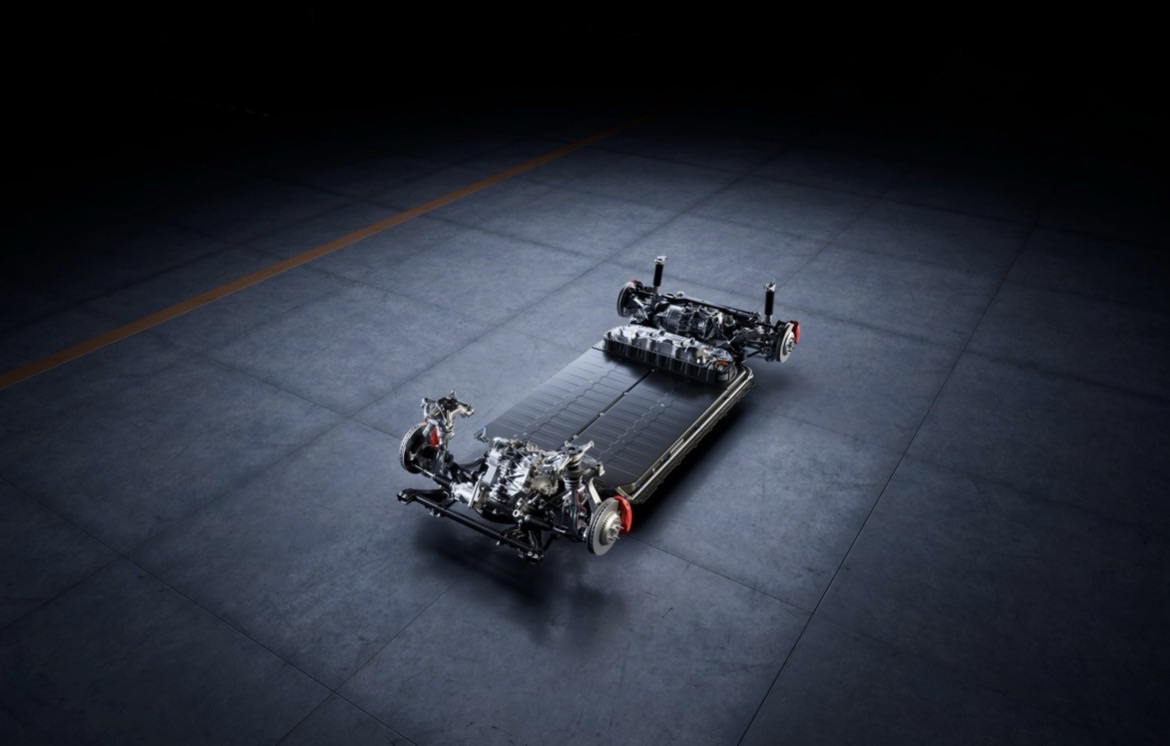
Canada's used EV market just set a new price floor, and it is much lower than anyone was quoting this time last year. Over half of used EVs in Canada now sell under $35,000, and sub-$30,000 inventory is surging. (Ridez, CarDog) Used EV sales in Canada surged 62% in 2025. (Ridez) Quebec posts the lowest average used EV price nationally at $33,117. (Clutch) The floor is a direct output of what is landing on wholesale lots right now, which is a single cohort of 2022 and 2023 model-year vehicles coming off three-year leases into a market with shrunken incentives.
Why the floor fell this fast
Canadian Black Book expects used EV supply to reach approximately 11% of Canadian used-vehicle supply in 2026 as 2023 leases mature. (Canadian Black Book) Across North America, roughly 300,000 electric vehicle leases are expected to return through 2026, most originated under generous incentive programs that set residuals higher than the post-incentive retail market can now support. (CDK Global, J.D. Power) Following the removal of federal iZEV incentives and provincial rebate reductions, ZEV market share declined sharply in early 2025 before stabilizing. (Canadian Black Book) Vehicles priced and financed against incentive-era MSRPs are now clearing through auctions and off-lease channels into a retail environment that will not pay those prices.
The pattern shows up cleanly in the MSRP-to-retail collapse on the 2022-2023 cohort. Those model years have hit a depreciation cliff, dropping 35% to 55% from their original MSRP. (CarDog) A 2022-2023 Tesla Model 3 Long Range that originally sold for $69,990 CAD can now be found for $45,000 to $52,000 CAD. (CarDog) Canadian Black Book forecasts overall used-vehicle depreciation at 14.5% in 2026, with four-year retained values averaging 54.7%, meaning EVs in the 2022-2023 cohort are depreciating at roughly three times the broader used-market rate. (Canadian Black Book)
The Tesla-versus-everything-else split
Even within the collapsing EV segment, retention is bifurcated. Model Y retains 5 to 7 percentage points more value than Model 3 at comparable age and mileage, with Model Y holding 67% to 69% versus Model 3's 52% to 62% at the two-year mark. (Recharged, CarDog) A 2021 Model Y Standard Range retails around $33,500 in 2026, equivalent to 61% value retention after four years. (CarDog) That is strong performance for an EV and mediocre performance for a mainstream SUV, which captures the frame of the whole market right now.
What sits below the Tesla tier
The sub-$20,000 layer includes 2021-2022 Hyundai Kona Electric, Volkswagen e-Golf, and BMW i3. Below $15,000, buyers find early Chevrolet Bolts and Kia Soul EVs. Under $10,000 surfaces older Nissan Leafs with smaller battery packs. (Canada Drives, Ridez) Each tier is a snapshot of a different vintage cohort clearing against a different original incentive structure, which is why depreciation curves diverge so sharply by nameplate.
The battery warranty changes the math
Every EV manufacturer in Canada offers a minimum 8-year, 160,000 km battery and drive-unit warranty. Tesla's coverage is fully transferable to subsequent owners, so a 2022 Model 3 purchased used in 2026 still carries four-plus years of factory battery coverage. (ThinkEV, Tesla) Tesla launched extended high-voltage battery and drive-unit coverage in Canada and the U.S. in 2026, with unused ESA coverage transferable once Tesla processes the ownership change. (Drive Tesla Canada, Tesla Canada) A used EV with transferable battery coverage is a fundamentally different residual asset than an equivalent-age ICE vehicle operating on powertrain coverage that expired years earlier.
Traditional residual curves built for internal-combustion vehicles do not fit EVs because of faster early-life depreciation and tech-driven obsolescence. Lenders and remarketers are rebuilding residual models specifically for EV lease returns, which is the plumbing change driving the price collapse retail buyers are seeing. (Digital Dealer) The old residual model was a bet that an EV would hold its MSRP curve like a Toyota. The new model accepts that EVs depreciate in front-loaded waves and prices the lease accordingly.
New-versus-used has flipped for the first time
The new Kia EV4 launched at $38,995 in Canada, making it the cheapest new EV in the market for 2026. (Automotive News, Empty Tank) That price is above a 2022-2023 Tesla Model 3 Long Range at current used pricing, and well above a 2021 Model Y Standard Range. A Canadian buyer comparing new-versus-used in 2026 is not looking at the typical new-car premium of 15% to 25%. They are looking at a scenario where a two-to-three-year-old premium EV costs less than the cheapest new one.
Condition and care are the new residual protection
When the wholesale floor is set by lease returns that all arrive at the same moment, a used EV's retained value gets decided by what is hard to standardize: battery health history, paint condition, interior wear, and documented service. The depreciation cliff is the market repricing the cohort against a post-incentive reality. The vehicles that will hold value above the cohort average through the next cycle are the ones that present cleanest at resale, because the only variable left on the lot when every unit is a 2022 or 2023 is how well the current owner maintained it.
Protect Your Investment
Ceramic coatings, paint protection film, and more — keep your vehicle protected year-round.
Book a Protection PackageRelated Articles

Canada Is Fighting a Two-Front Car War. Alberta Is Watching From the Cheap Seats.
The trade talks collapsed on a Friday night. Canada's retaliation kicks in September 8. Meanwhile, the Chinese EV quota meant to deliver cheap cars is mostly importing Teslas.

The Auto Detailing Industry Just Hit $1.8 Billion in Canada. Here's What's Driving It.
Canada's auto detailing market grew 3.5% annually since 2021 with 3,929 businesses. Ceramic coating, PPF, and changing demographics are reshaping the industry.

Canada's Used-Car Market Is a Single-Vintage Problem
Canadian used-vehicle listings hit 235,577 in March 2026, the highest count since August 2025, even as the 0-to-8-year-old supply pool is projected to contract 2.6% across the year. Both statements are true because the rebuild is concentrated in a single vintage: 2022 and 2023.