Wildfire Smoke Is Damaging Your Car's Paint Right Now: What Alberta Drivers Need to Know
Wildfire ash creates acidic residue that etches clear coat and causes swirl marks if wiped dry. How to safely clean and protect your vehicle during smoke season.
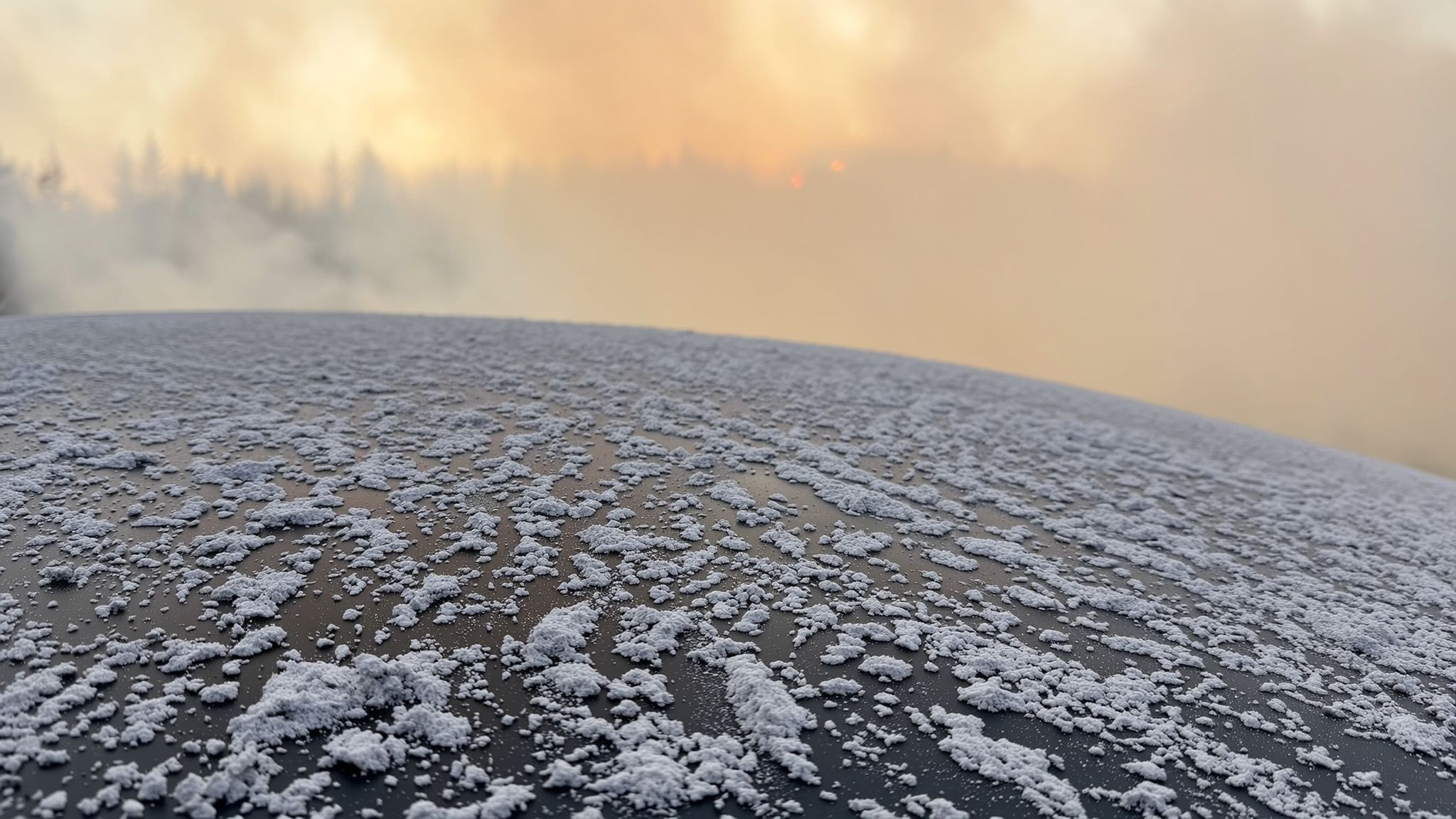
If you've been in Edmonton or Calgary over the past few weeks, you've seen the haze. Environment Canada issued air quality warnings across most of Alberta north of Red Deer on July 20, with the Air Quality Health Index hitting 10+ as smoke from BC, Saskatchewan, and NWT wildfires settled over the province. That haze isn't just a respiratory concern. It's sitting on your car right now, and it's doing more damage than most people realize.
On August 4, Ziebart CEO Thomas A. Wolfe issued a national warning that wildfire smoke is damaging vehicles "thousands of miles from the flames." The particles in wildfire smoke are microscopically abrasive and chemically acidic. When they land on your vehicle's paint, they don't just sit there. They bond to the surface, and when moisture hits — morning dew, a light rain, even humidity — the ash creates a mildly acidic solution that can etch into your clear coat over time.
This isn't theoretical. Alberta has dealt with wildfire smoke in some form every summer for the past several years, and the vehicles that come in for detailing after smoke events consistently show the same patterns of damage.
What Wildfire Ash Actually Does to Automotive Paint
Wildfire ash isn't like regular dust or road grime. It contains calcium, potassium, and other mineral compounds that become alkaline or acidic when they interact with water. The specific pH depends on what burned — grass fires produce different ash chemistry than timber fires — but the result is similar: a corrosive film that attacks your clear coat.
The damage happens in two stages. First, the dry particles accumulate on horizontal surfaces — your hood, roof, trunk lid, and the tops of your side mirrors. They look like a fine grey or yellowish dust. At this point, the damage is minimal as long as you don't touch them.
The second stage is where the real problems start. When moisture arrives — and in Alberta, that can be morning dew, an afternoon thunderstorm, or just parking under a sprinkler — the ash particles activate. They form a slightly acidic or alkaline slurry that begins to dissolve the clear coat at a microscopic level. If the vehicle sits in this state for days without being properly washed, the etching can become permanent. You'll see it as dull spots, water marks that won't buff out, or a general loss of gloss that no amount of washing will fix.
The Dry Wipe Mistake That Creates Swirl Marks
Here's where most people make things worse. You walk out to your car, see the layer of ash, and instinctively grab a towel or use the sleeve of your jacket to wipe it off. That's the single worst thing you can do.
Wildfire ash particles are abrasive. They contain microscopic mineral fragments — essentially tiny shards of calcium carbonate and silica. When you drag a dry cloth across a surface covered in these particles, you're grinding them into the paint. The result is hundreds of fine scratches, commonly called swirl marks, that dull the finish and are visible under direct sunlight.
The same applies to using a dry car duster, a California duster, or any tool that pushes the particles across the surface without first lifting them off. Even a quick wipe with a damp towel without proper lubrication will drag ash particles across the clear coat.
How to Safely Remove Wildfire Ash from Your Vehicle
The correct approach is a thorough rinse before anything touches the surface. If you have access to a garden hose, start by flooding the entire vehicle with water from the top down. Don't use a pressure nozzle at close range — the goal is volume of water, not pressure. You want the water to float the particles off the surface, not blast them sideways and grind them in.
After a thorough rinse, wash with a proper car wash soap (not dish soap, which strips any existing wax or sealant) using a two-bucket method: one bucket with soapy water, one with clean rinse water. Dip your wash mitt in the soapy water, wash a panel, then rinse the mitt in the clean water before reloading with soap. This keeps the ash particles you've picked up from going back onto the paint.
If your vehicle has been sitting in heavy smoke for more than a few days, a standard wash may not be enough. Ash residue can bond to the surface in a way that regular soap won't break down. A clay bar treatment after washing can pull embedded contaminants out of the clear coat. It's a step most people skip, but during smoke season in Alberta, it makes a real difference.
Don't forget the interior. Wildfire smoke particles are small enough to enter your cabin through your ventilation system, even with the windows closed. They settle on your dashboard, seats, and carpets. If your vehicle smells like smoke after a heavy smoke event, the particles are already inside. A thorough interior cleaning — including replacing or cleaning your cabin air filter — is worth doing before those particles work their way into fabric and leather.
Why Ceramic Coating Matters During Smoke Season
Ceramic coating creates a hydrophobic, chemically resistant layer on top of your clear coat. It doesn't make your vehicle immune to wildfire ash, but it changes the equation in two important ways.
First, the coating acts as a sacrificial barrier. When acidic ash residue forms on the surface, it attacks the ceramic layer instead of your clear coat. The coating is designed to handle chemical exposure that would otherwise damage the paint directly.
Second, a ceramic-coated surface is dramatically easier to clean. Because the coating is hydrophobic, water sheets off the surface and takes contaminants with it. A simple rinse removes far more ash from a coated vehicle than from an uncoated one. That matters during extended smoke events when you might need to rinse your vehicle every few days — the easier each rinse is, the less likely you are to introduce scratches from unnecessary contact.
If your vehicle isn't coated, a quality spray sealant or wax applied after a thorough decontamination wash provides a temporary version of the same protection. It won't last as long as a professional ceramic coating, but it gives your clear coat a buffer for the remainder of smoke season.
Paint Protection Film for High-Impact Areas
Paint protection film (PPF) offers a physical barrier that ceramic coating doesn't. Where ceramic coating is a chemical layer measured in microns, PPF is a thermoplastic urethane film that physically absorbs impacts and resists abrasion. For high-impact areas like the hood, front bumper, and side mirrors — the surfaces that catch the most airborne debris, including ash — PPF provides the highest level of protection available.
PPF is a larger investment than ceramic coating, and most vehicle owners apply it selectively to the areas that take the most abuse. But during wildfire seasons that are becoming more frequent and more intense in Alberta, the case for protecting at least the front-facing surfaces is getting stronger every year.
What to Do Right Now
If your vehicle has been sitting in wildfire smoke, here's what to prioritize:
Rinse your vehicle thoroughly with water before touching the surface with anything. Don't dry wipe, don't use a duster, don't use a quick detailer spray without rinsing first.
Follow the rinse with a proper two-bucket wash using car wash soap. If the vehicle has been in heavy smoke for more than a few days, consider a clay bar treatment after washing.
Check your cabin air filter. If it smells like smoke inside your vehicle, the filter has been absorbing particulate matter and may need replacement.
If your paint already shows dull spots, water marks, or loss of gloss after washing, those may be chemical etch marks from prolonged ash exposure. A professional paint correction can remove light etching, but it needs to be addressed before the damage works through the clear coat.
And if you want to get ahead of the next smoke event — because in Alberta, there will be a next one — ceramic coating or PPF applied to a properly decontaminated surface is the most effective long-term protection available.
If your vehicle needs a proper decontamination wash, paint correction, or you're considering ceramic coating before the next wave of smoke rolls in, book an appointment and we'll take care of it.
---
Tags:
Protect Your Investment
Ceramic coatings, paint protection film, and more — keep your vehicle protected year-round.
Book a Protection PackageRelated Articles

Sherwood Park Is the Edmonton-Area Car Town Nobody Writes About
Thirty-three years of organized car shows. A dealership running Cars & Coffee all summer. A custom shop with a burnout competition. And zero editorial coverage — until now.

Canada Is Fighting a Two-Front Car War. Alberta Is Watching From the Cheap Seats.
The trade talks collapsed on a Friday night. Canada's retaliation kicks in September 8. Meanwhile, the Chinese EV quota meant to deliver cheap cars is mostly importing Teslas.

The Auto Detailing Industry Just Hit $1.8 Billion in Canada. Here's What's Driving It.
Canada's auto detailing market grew 3.5% annually since 2021 with 3,929 businesses. Ceramic coating, PPF, and changing demographics are reshaping the industry.