The EV Resale Trap: Why a $100 Detail Beats a $2,000 Loss
Most EV owners lose sleep over battery degradation. Meanwhile, their car's resale value is bleeding out through swirl marks on the hood and coffee stains o
Most EV owners lose sleep over battery degradation. Meanwhile, their car's resale value is bleeding out through swirl marks on the hood and coffee stains on the driver's seat.
The gap between what you think protects your EV's value and what actually moves the needle at trade-in time is costing you thousands. Here's what the numbers say and what you can do about it before your next sale.
The Battery Myth vs. The Real Depreciation Driver
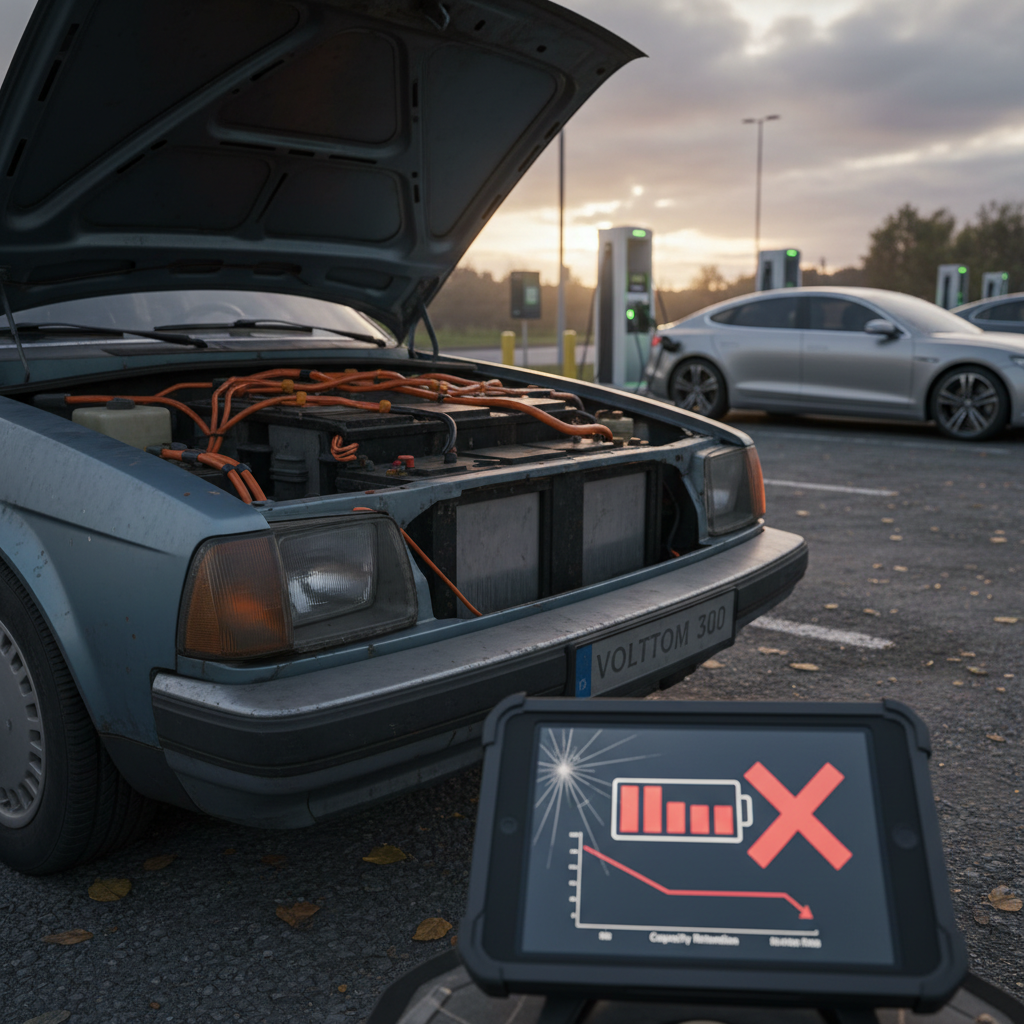
EV batteries maintain around 90% of their original capacity after 100,000 miles when properly maintained, according to industry data tracking five-year depreciation curves. That's the good news.
The bad news? By mid-2024, the average used EV sold for $28,000-$29,000 while gas cars exceeded $31,000. And it's not because the batteries are failing.
Buyers have figured out that battery longevity is real. What they haven't figured out is why you let the paint look like that.
Paint protection and interior preservation matter more for EVs due to their premium market positioning. A $45,000 Model 3 buyer expects near-perfect condition because "high-tech vehicle" translates to "meticulously maintained" in their head. Show them swirl marks under the dealer lot lights, and they'll lowball you even if your range estimate is perfect.
You can't upgrade your 2022 battery to match 2025 range specs. But you absolutely can protect the surfaces that determine whether a buyer sees your car as a premium vehicle or a daily driver that's been through it.
Source: Electric Car Depreciation Rate by Model (2025 Guide)
The 10% Rule: What Professional Detailing Actually Costs vs. Returns
According to professional detailing impact studies, professionally detailed vehicles command 10-15% higher resale prices compared to vehicles with visible cosmetic defects. On a $35,000 EV, that's $3,500 to $5,250 back in your pocket at trade-in time.
The math is blunt. A full correction detail runs $300-400 before you list your car. That same service prevents a $3,500 hit on your sale price. You're looking at an 875% return on investment for one afternoon of professional work.
The minimum schedule that actually protects car value? Seasonal details to address salt removal in spring and winter prep in fall, plus spot corrections for high-wear zones every few months. Driver's seat bolster, door sills, and the charging port area take the most abuse and show damage first to trained eyes.
Dealer inspectors flag these issues immediately: charging port scratches from fumbling with cables in parking garages, regenerative braking dust baked into wheels, and UV damage on black trim pieces around door handles. All preventable with quarterly maintenance. All penalized at trade-in appraisal.
If you'd rather leave this to a pro, book a mobile detail and we'll handle the high-wear zones before they compound into resale penalties.

Source: Do Electric And Hybrid Cars Hold Their Value?
The High-Wear Zones Dealers Check First
Steering wheel texture tells the whole story. Hand sanitizer and lotions break down leather faster than UV exposure, leaving that shiny "used car" patina that screams neglect. Leather conditioner every six months keeps the grain intact and prevents the slick finish that kills perceived value.
The charging port area is the new gas cap, except buyers who know EVs will crouch down and inspect it with a phone flashlight. Scratches from fumbling cables in the dark, paint chips along the door edge, and residue from charging cables signal that you treated a $50,000 vehicle like a rental car.
Door sills and rocker panels take double abuse on EVs. You're getting in and out at charging stations more frequently than gas car owners visit pumps, and winter salt accumulates in the exact spots where your boots scrape every time. That builds up faster than you think. Calgary's chinook cycles make it worse, with freeze-thaw patterns forcing road brine into every crevice and accelerating corrosion on rocker panels that buyers will absolutely inspect before making an offer.
Piano black trim and touchscreens show micro-scratches under dealer lot lighting that you'd never notice in your garage. Dry-wiping with your sleeve creates permanent hazing. Use a dedicated microfiber cloth with screen cleaner, or accept that buyers will see a spiderweb of scratches when they test the infotainment.
Address these zones every three to four months, not just when you're prepping to sell. Damage compounds exponentially. A $40 leather treatment now prevents a $400 seat repair quote that a dealer will use to negotiate you down.
.avif)
Source: Used Electric Car Prices & Market Report — Q1 2026
Range Anxiety Is Real, But Range Perception Kills Your Sale
Every ten miles of additional battery range increases an EV's resale value by approximately 5%. But a dusty, neglected exterior makes buyers assume the battery is degraded too, regardless of what the diagnostics say.
Buyers conflate visible neglect with mechanical neglect. If you didn't care enough to wash the car, why would they trust you cared about the battery's charging habits or thermal management?
There's a halo effect in reverse at play here. A flawless exterior and interior makes buyers more willing to accept slightly lower range numbers because the overall vehicle signals "careful ownership." They'll rationalize that 5% range loss is normal wear. They won't rationalize away seat stains and rock chips.
For hybrids specifically, engine bay detailing tips the scale. Buyers are checking whether you treated it like an EV (minimal maintenance mentality) or a gas car (regular fluid checks and care). A clean bay with fresh hoses and no grime buildup around the battery terminals signals you understood what you owned.
The 90-Day Pre-Sale Window That Actually Works
Selling in three months? Get a full correction detail now, then maintain with basic washes every two weeks. Fresh damage in the final weeks won't have time to compound into deal-breakers, and you'll have documentation that the car was professionally serviced recently.
Selling in one to two years? Quarterly maintenance details protect your investment without the sticker shock of a full correction later. Paint correction on a five-year-old EV with neglected clear coat runs $800-1,200. More if you've got black or dark blue paint with deep swirls.
The DIY budget approach that actually works: ceramic spray sealant every three months ($25 per bottle, 30 minutes of application time), interior vacuum and wipe-down bi-weekly, and a professional detail twice per year to catch what you miss. That schedule keeps surface contamination from bonding to the clear coat and prevents the interior from developing that "lived-in" smell.
Don't cheap out on paint correction and ceramic coating if your EV is black, dark blue, or red. These colors show every defect under phone camera lights, and every single buyer will photograph your car before they commit to a test drive. Swirl marks that look minor in your garage turn into glaring flaws in a listing photo. High elevation means stronger UV exposure than lower cities. That clear coat is taking more punishment than you realize, and it shows up fast on dark paint when the sun hits it at the right angle.
The mobile advantage here is real. You're not losing a Saturday sitting at a detail shop when you should be cleaning out the glovebox, pulling service records, and prepping your listing. We come to you, handle the work while you're doing everything else, and you get the car back ready to photograph.
Ready for Professional Car Care?
Experience the Sahr, Rhymes with Car difference — mobile detailing that comes to you.
Book NowRelated Articles

Bought an EV in Alberta? Here's What Your Dealership Didn't Tell You About Paint and Brake Care
Canadian EV sales are up 40% in 2026. Regenerative braking causes caliper corrosion, and higher-value vehicles need paint protection. What EV owners should know.
Your Sedan Just Cost You $200 You Didn't Need to Spend
The average sedan owner spends $900 a year on maintenance, but most of that money goes to the wrong stuff. You're dropping $80 on a premium wash package wi
Skipping Paint Correction? Here's What It's Actually Costing You
You've noticed the swirl marks. Maybe they only show up in direct sunlight, or when you're standing at the right angle in a parking lot. They're not terrib